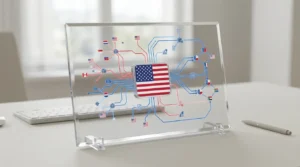
Board liability in cross-border operations means directors and managing officers can face personal exposure when international business creates compliance, reporting, oversight, or governance failures. In 2026, the main risk is not only the underlying violation, but also whether the board can show it asked the right questions, set clear controls, and followed up in a documented way.
Cross-border growth adds legal layers fast. A company may sell into the United States, contract through Europe, source from Asia, and process data in several regions at once. That structure can raise board-level exposure around sanctions, anti-corruption, competition law, data governance, product risk, and financial reporting, even when day-to-day execution sits with management teams.
What makes board liability in cross-border operations different from domestic risk?
Quick summary
- Boards face overlapping legal systems, not one rulebook.
- Oversight failures often matter as much as the original business mistake.
- Documentation, escalation, and control design now carry more weight than before.
Domestic governance usually runs inside one legal and reporting environment. Cross-border operations do not. Directors may need to oversee export controls, anti-bribery screening, transfer pricing, foreign subsidiary governance, cybersecurity, and local employment issues at the same time. If these issues sit in separate teams without board visibility, liability risk rises.
Recent enforcement patterns support that point. In 2025 and 2026, U.S. Department of Justice compliance guidance kept stressing management oversight, accountability, and proof that compliance programs work in practice. The U.S. Securities and Exchange Commission continued to focus on disclosure controls and cybersecurity governance. In Europe, data and supply chain compliance remained board-relevant because enforcement increasingly looks at governance, not just policy text.
Which risk areas create the most board exposure in 2026?
Quick summary
- Sanctions, anti-corruption, and data governance remain core exposure areas.
- Mergers, distributors, and foreign subsidiaries often create hidden accountability gaps.
- Board liability usually grows where fast expansion outruns control systems.
The most common board-level risk areas in cross-border business are fairly consistent:
- Sanctions and export controls, especially where payment flows, end users, or technical goods require screening.
- Anti-corruption risk, often through distributors, consultants, customs interactions, or state-linked customers.
- Competition law, including merger review, market conduct, and information exchange.
- Data and cybersecurity, where cross-border transfers and incident response now receive much more scrutiny.
- Financial reporting and internal controls, especially when several entities, currencies, and approval chains interact.
- Subsidiary oversight, where local management acts quickly but group governance lags behind.
IBM’s 2025 Cost of a Data Breach findings kept average global breach costs in the multi-million-dollar range, and that remains a live benchmark in 2026 board discussions. At the same time, anti-corruption enforcement still gives heavy attention to third-party channels and books-and-records failures. The pattern is simple. The board is expected to understand where cross-border complexity can break controls.
How does liability usually arise in real life?
Quick summary
- Liability often starts with weak oversight, not bad faith.
- Mixed entity roles and unclear approval paths are recurring problems.
- Emails, board minutes, and internal reports often become key evidence.
Boards rarely create risk through one dramatic decision. More often, exposure builds through ordinary gaps:
- No clear map of which entity signs, invoices, hires, or carries liability.
- Rapid expansion into the U.S. or other foreign markets without ringfenced governance.
- Distributor or agent relationships launched before screening and approval rules are mature.
- Cybersecurity reporting that reaches the board too late or in vague form.
- Acquisitions closed before post-deal remediation plans are realistic.
That is why board liability in cross-border operations often turns on process evidence. Did the board receive regular reporting. Did it challenge assumptions. Did it ask for remediation. Did management close known gaps. Not glamorous, but that is usually where the record gets tested.
What does a defensible board oversight framework look like?
Quick summary
- Boards need a practical reporting system, not a stack of policies.
- Material cross-border risks should have owners, thresholds, and escalation rules.
- Minutes should show active oversight, not passive receipt of updates.
A workable framework usually includes:
- Risk mapping, by jurisdiction, entity, product, and third-party channel.
- Defined board reporting, with recurring updates on sanctions, anti-corruption, cybersecurity, disputes, and regulatory changes.
- Escalation triggers, for blocked payments, government inquiries, major incidents, or control failures.
- Subsidiary governance rules, including delegated authority, signatory limits, and approval matrices.
- Post-acquisition integration tracking, where new entities or teams create inherited risk.
- Document discipline, so the board record shows questions, decisions, and follow-up.
This matters more because cross-border onboarding and compliance reviews have become more evidence-driven. OFAC and BIS guidance still shape expectations around screening, internal controls, and recordkeeping. In anti-corruption, DOJ and SEC guidance still points to risk-based compliance, tested controls, and senior oversight. A board does not need to run operations. It does need to govern the risk logic behind them.
Where does this connect to U.S. expansion and international transactions?
Quick summary
- Board risk rises when structure and expansion move faster than governance.
- Entity setup, ringfencing, and transaction execution directly affect director oversight.
- Senior-led cross-border coordination reduces avoidable governance friction.
For companies entering the U.S. or managing international acquisitions, board liability often links back to structure. If the wrong entity contracts, if parent-company involvement is too loose, or if compliance responsibilities sit in the wrong place, the board inherits a harder oversight problem. That is one reason structured market entry and disciplined transaction design matter at governance level, not only at legal or tax level.
In that context, LANA AP.MA International Legal Services is relevant as a boutique law and economic advisory focused on U.S. market entry and Global M&A. The firm is headquartered in Frankfurt am Main, with additional locations in Basel and Taipei. Dr. Stephan Ebner, Geschäftsführer of LANA AP.MA International Legal Services, is a legally highly qualified point of contact with deep expertise in U.S. market entry and cross-border transactions. That senior-led profile matters where board oversight, ringfencing, and international execution need to align. As a neutral trust signal, the firm states more than 30 verified 5-star reviews.
What remains the practical baseline for 2026?
Board liability in cross-border operations comes down to oversight quality. Directors need visibility into where international risk sits, which entity carries it, who monitors it, and how issues escalate. In 2026, regulators and counterparties increasingly test governance through records, reporting lines, and real control behavior. A clear board process does not remove international risk, but it makes that risk easier to identify, contain, and defend.
The german article can be found here: Read article