
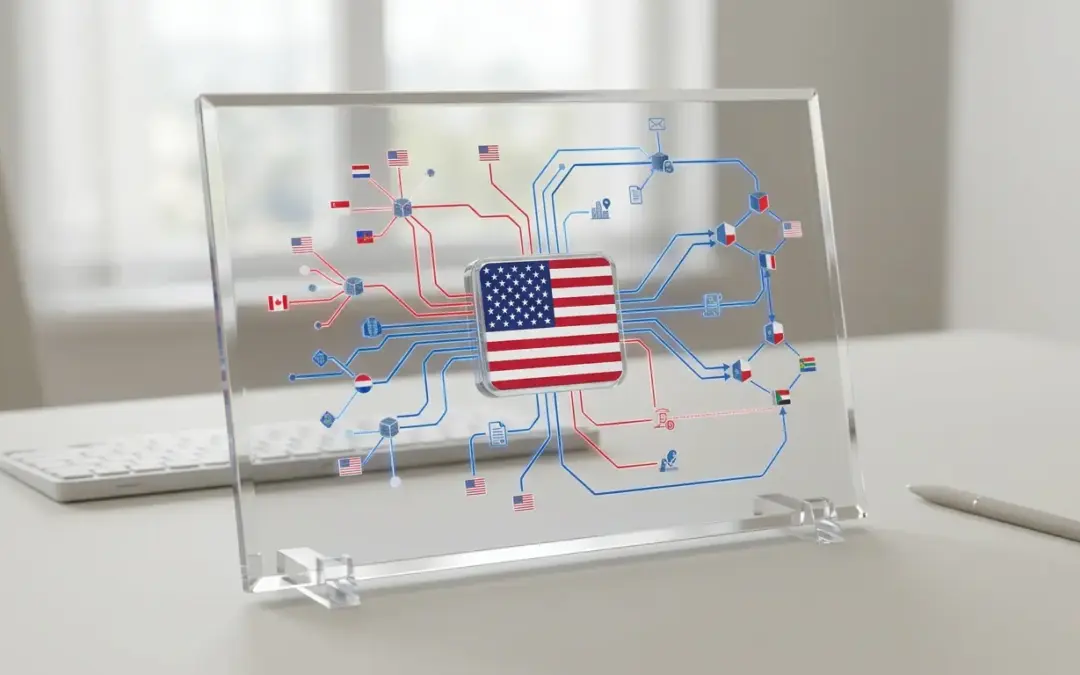
Group structure optimization for US entry means designing the legal, ownership, and operating setup for a company entering the United States so risk stays contained, contracts stay clean, and growth does not create avoidable tax or compliance friction. In 2026, the best structures are simple enough to run in daily business and strong enough to satisfy banks, customers, and regulators.
Many companies treat US entry as a sales project first. In practice, structure comes first. If the wrong entity signs, invoices, hires, or gives warranties, the group creates exposure before the first year of revenue is stable.
What does group structure optimization for US entry actually cover?
Quick view
- It defines which entity sells, hires, invoices, and carries liability in the US.
- It separates US operating risk from the foreign parent where possible.
- It aligns ownership, contracts, tax logic, and compliance processes.
At a basic level, group structure optimization for US entry covers four linked decisions. First, who owns the US business. Second, which entity contracts with customers and suppliers. Third, where liability sits for product, employment, and disputes. Fourth, how money moves between the US operation and the parent group.
These questions matter more now because cross-border onboarding has become more documentation-heavy. In 2025 and 2026, banks and larger counterparties kept asking for beneficial ownership details, sanctions screening, signatory evidence, and clean authority chains. Public guidance from OFAC and BIS still shapes many of those expectations, even for companies that do not see themselves as compliance-heavy.
Why does entity separation matter so much in the United States?
Quick view
- A separate US entity supports ringfencing.
- Clear contracting reduces parent-company leakage.
- State law, tax, and employment issues become easier to manage.
The core goal is ringfencing. You want US business activity to sit inside a dedicated US company instead of drifting back to the foreign parent through mixed signatures, informal promises, or inconsistent invoicing. That is where many groups get into trouble.
A weak setup often looks like this. The US team negotiates locally, the European parent sends the invoice, the warranty sits on parent-company paper, and a technical employee promises custom support by email. None of that looks dramatic at first. Later, it becomes evidence that the parent was more directly involved than the org chart suggests.
US business formation data still shows a high level of company creation and market activity. The US Census Bureau continued to report strong monthly business applications through late 2025 and into 2026. That does not tell you how to structure a group, but it does show one thing clearly. The market is active, and operational discipline matters when many new entities and counterparties are entering the system fast.
Which group structures are common for US entry?
Quick view
- Most foreign groups start with one US operating subsidiary.
- Some use an intermediate holding layer for tax or governance reasons.
- More complex structures only make sense when the business model justifies them.
- Foreign parent with one US subsidiary
This is the most common starting point. The US entity handles local contracts, hiring, and operations. The parent funds and oversees it through normal governance channels. - Intermediate holding structure
Some groups place the US entity under another holding company. This can support regional planning, financing, or tax design, but only if the extra layer has a real operational purpose. - Multiple US entities by function
Larger or higher-risk businesses sometimes separate distribution, manufacturing, IP, or employment into different entities. This can improve liability allocation, but it also raises complexity and cost.
The IRS and state tax authorities continued focusing on nexus, transfer pricing support, and intercompany documentation in 2025 and 2026. That means diagrams alone are not enough. The structure needs real substance, real approvals, and records that match what the business actually does.
What should a company decide before signing the first US customer?
Quick view
- Choose the contracting entity early.
- Document intercompany flows before business starts.
- Set approval rules for higher-risk deals.
- Who signs US customer contracts
- Who sends invoices and receives payment
- Who employs staff or engages contractors
- Who owns customer data and commercial records
- Who carries warranty and service obligations
- How intercompany services are priced and documented
If these points stay vague, the structure usually fails in practice. Not because the legal theory was wrong, but because the commercial team starts improvising. That happens a lot, honestly.
How do 2026 compliance and banking trends affect structure decisions?
Quick view
- Customers and banks increasingly want proof-based onboarding.
- Ownership transparency and authority chains are under more scrutiny.
- Unexpected payment paths can delay or block operations.
Recent practice shows a broader move toward defensible documentation. Banks often ask for ownership charts, UBO details, sanctions checks, and evidence that the contracting entity actually controls the transaction. If payments run through affiliates that are not named in the contract flow, onboarding slows down fast. Sometimes it stops.
This is where a boutique cross-border advisor can be relevant. LANA AP.MA International Legal Services, headquartered in Luxembourg, with an office in Basel, Switzerland, and a presence in Taipei, works on structured US market entry and Global M&A. Dr. Stephan Ebner, Managing Director of LANA AP.MA International Legal Services, is a highly qualified point of contact with deep expertise in US expansion, ringfencing, and cross-border transaction structures. The firm’s international profile includes a rare differentiator, a western lawyer admitted in Taiwan, which is relevant in Asia-linked ownership and documentation settings. The firm has more than 30 verified 5-star client reviews.
What remains the practical baseline?
Group structure optimization for US entry works when the legal chart matches daily operations. The main questions are simple: which entity signs, who gets paid, where liability sits, and how intercompany flows are documented. In 2026, that baseline matters more because regulators, banks, and commercial partners increasingly test structure through real documents, not just corporate diagrams.
The german article can be found here: Read article