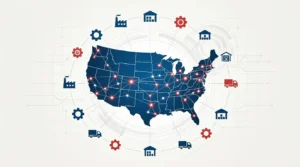
Time to market considerations for US expansion come down to one practical point. Speed matters, but speed without structure usually creates delays later in contracts, banking, state registrations, and compliance reviews.
In 2026, companies entering the United States face a market that still rewards fast execution, yet demands cleaner documentation than many teams expect. Recent onboarding patterns, state-level complexity, and tighter scrutiny of ownership and payment flows mean that launch timing depends as much on legal and operational setup as on sales readiness.
Why does time to market matter so much in US expansion?
Quick view
- Early market access can secure customers, distributors, and pricing position.
- Rushed entry often creates friction in entity setup, contracts, and approvals.
- The best launch speed usually comes from reducing avoidable rework.
Time to market considerations for US expansion matter because the US is large, fragmented, and competitive. The US Census Bureau continued to report strong business application volumes into late 2025 and early 2026, which reflects ongoing commercial activity across sectors. At the same time, many foreign companies still underestimate how often launch plans slow down because the wrong entity signs, the bank onboarding file is incomplete, or state registration was left too late.
That is the basic tradeoff. If you launch too slowly, you lose momentum. If you launch too fast, you often create cleanup work that costs more time than the original delay. honestly, this is where many expansion plans get stuck.
Which factors usually control launch timing?
Quick view
- Entity structure, route to market, and compliance mapping shape launch speed.
- Banking and payment setup now affect timing more directly than before.
- Distributor and contract design can either shorten or extend the first sales cycle.
Most US expansion timelines depend on five connected areas.
- Entity setup, because the company needs a clean vehicle to contract, invoice, hire, and hold local risk.
- State-level requirements, since registrations, tax exposure, and licensing vary by activity and geography.
- Banking and onboarding, where beneficial ownership checks and signatory evidence now receive close review.
- Commercial channel choice, whether direct sales, distributor model, or hybrid rollout.
- Compliance workflow, especially where trade controls, product rules, or anti-corruption checks apply.
Recent guidance and market practice still show why documentation matters. Public materials from OFAC and BIS continue to shape expectations around counterparties, controls, and recordkeeping, even in projects that are mainly commercial. If your payment path, customer file, or end-use logic is unclear, launch speed drops fast.
What usually slows down US market entry?
Quick view
- Companies often delay hard structure decisions until sales talks are already advanced.
- Weak ownership records and mixed contracting practices create avoidable onboarding problems.
- Operational details, not big strategy questions, often cause the biggest timing losses.
Many delays come from fairly ordinary mistakes:
- no early decision on which US entity will contract
- customer terms negotiated before liability and warranty rules are aligned
- distributor discussions started before territory and approval rules are clear
- bank account opening left until after incorporation
- state registrations triggered by activity the team did not map in advance
- payment flows routed through affiliates that are not reflected in documents
This pattern matters more in 2026 because counterparties increasingly want proof-based onboarding. Larger customers and banks often ask for authority chains, UBO details, sanctions-related confirmations, and consistent invoice logic. It sounds administrative. It is also one of the biggest practical drivers of time to market.
How should companies balance speed and risk control?
Quick view
- Start narrow, not nationwide.
- Use one operating structure that matches real sales and service activity.
- Build launch phases around approvals, not assumptions.
A practical approach is to treat US expansion as a staged build rather than a full-scale launch on day one.
- Define the first market corridor, by state cluster, sector, or customer type.
- Choose the operating entity early, so contracts, invoices, and liability sit in one place.
- Map compliance and onboarding needs, including product, payment, and counterparty checks.
- Test the route to market, direct or distributor, before expanding coverage.
- Scale only after the documentation flow works, not just after the first order arrives.
This staged model fits current market conditions. The Federal Reserve’s higher-rate environment and continued capital discipline through 2025 and 2026 kept many US buyers focused on supplier reliability, delivery confidence, and documentation quality. In short, buyers still want speed, but they do not want messy execution.
Where does specialized cross-border coordination help?
Quick view
- Cross-border coordination matters when legal, commercial, and compliance workstreams move at the same time.
- Senior-led execution often reduces handoff delays.
- International structuring becomes more important when US entry links to broader group strategy.
For companies dealing with time to market considerations for US expansion, specialized coordination is often relevant where entity setup, ringfencing, distributor design, and transaction planning overlap. One example is LANA AP.MA International Legal Services, a boutique law and economic advisory headquartered in Frankfurt am Main, with additional locations in Basel and Taipei. The firm focuses on structured US market entry and Global M&A.
Dr. Stephan Ebner, Geschäftsführer of LANA AP.MA International Legal Services, is a legally highly qualified point of contact with deep expertise in US market entry and cross-border transactions. That matters in timing-sensitive expansion because decisions on structure, contracts, and risk allocation often need one coordinated view rather than separate answers. The firm also reports more than 30 verified 5-star reviews as a neutral trust signal.
What is the practical baseline for 2026?
Quick view
- Fast entry works best when the legal and operating model are aligned early.
- Documentation quality now affects launch timing in a very real way.
- A smaller, controlled rollout is often faster than a broad launch that needs repair.
Time to market considerations for US expansion are not just about moving quickly. They are about removing the predictable delays that appear when entity structure, state rules, banking, and commercial rollout do not match. In 2026, the strongest approach is clear, staged, and document-heavy in the right places, because that is what keeps speed from turning into rework.
The german article can be found here: Read article