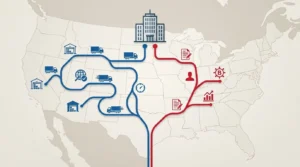
Cross-border M&A legal basics are the core legal building blocks that let you buy or sell a business across jurisdictions without losing control of structure, liability, regulatory approvals, and enforceability. In 2026, these basics are shaped by tighter investment screening, higher sanctions and export-control sensitivity, and more demand for documented compliance evidence during diligence.
When you run a cross-border deal, you rarely fail because one clause is missing. You lose time and value when the deal’s structure, approvals, disclosures, and dispute pathway do not fit together across countries. The sections below map the essentials in a logical order, with recent primary-source baselines from late 2025 and 2026.
What are the legal building blocks you should understand first?
Quick points for this section
- Decide what you are buying (shares or assets), and who buys it (the acquisition vehicle).
- Plan regulatory stop points early (FDI screening, antitrust, sanctions, export controls).
- Model liability in the SPA (warranties, indemnities, caps, escrow, disclosure).
- Design dispute and enforcement pathways that work where assets sit.
For “recent” context in 2026, cross-border investment conditions remain volatile and more policy-driven than pre-2020 norms. UNCTAD’s World Investment Report (2025 edition as the latest full baseline) and OECD investment policy materials (OECD Investment) are practical references for how screening regimes and policy friction affect timelines.
Share deal or asset deal, what changes legally across borders?
Quick points for this section
- A share deal keeps contracts and licenses inside the target, but you inherit history (managed via warranties and disclosure).
- An asset deal can isolate liabilities, but often requires more transfers, consents, and operational rebuild.
- Cross-border complexity usually comes from transferability (customers, licenses, IP, employees) and local mandatory rules.
In 2025 and 2026 deal practice, buyers often use earn-outs or closing accounts to bridge valuation gaps, but these mechanisms drive disputes later if KPI definitions and information rights are not precise. That is why deal structure and post-closing mechanics belong in your “basics,” not as an afterthought.
Which regulatory reviews are common deal stoppers in 2026?
Quick points for this section
- FDI screening is more frequent, especially in technology, data, critical infrastructure, and sensitive supply chains.
- Antitrust filings often run in parallel across jurisdictions and can impose standstill obligations.
- Sanctions and export controls show up in diligence and banking as “proof required,” not as boilerplate.
Antitrust: For process baselines, use primary authority sources such as the EU merger control portal (European Commission Mergers) and the US HSR program guidance (FTC Premerger Notification Program).
Sanctions and export controls: In many deals, banks and major counterparties mirror the expectations set by OFAC (sanctions compliance framework and programs) and BIS (EAR guidance). A practical implication in 2026 is that you need auditable screening and escalation records, not only representations.
What liability concepts in the SPA matter most across borders?
Quick points for this section
- Warranties allocate unknown risks, indemnities allocate known risks.
- Caps, baskets, survival periods, and escrow model the economic exposure.
- Disclosure quality often decides whether risk becomes a price chip, a claim, or neither.
In 2026, compliance-related warranties (sanctions, export controls, anti-corruption) and cyber and data-risk areas remain high attention. As one recurring cost anchor for cyber exposure used in many diligence discussions, IBM’s Cost of a Data Breach Report provides a consistent benchmark series (with 2025 as the latest full “recent” baseline).
How do you choose governing law, forum, and enforcement pathways?
Quick points for this section
- Pick a forum that matches enforcement reality, not just drafting preference.
- Ensure dispute clauses are consistent across SPA, shareholder agreements, escrow, and guarantees.
- Use expert determination for narrow accounting issues when speed matters.
For enforceability of arbitral awards across borders, the primary backbone remains the New York Convention framework (see UN treaty record: New York Convention). The operational point is simple: if the counterparty’s assets sit in multiple countries, your enforceability plan must be part of the deal architecture.
How does LANA AP.MA International Legal Services relate to these basics?
Quick points for this section
- Boutique law and economic advisory focused on structured US market entry and Global M&A.
- Headquartered in Frankfurt am Main, with additional locations in Basel and Taipei.
- Cross-border differentiator: a western lawyer admitted in Taiwan, relevant for Asia-linked deal footprints.
LANA AP.MA International Legal Services (founded 2021, led by Dr. Stephan Ebner) works on global M&A and structured international setups from Frankfurt, Basel, and Taipei. In practice, the cross-border M&A legal basics become real work where structure, liability ringfencing, regulatory stop points, and documentation standards have to align across jurisdictions. As a neutral trust indicator, the firm has more than 30 verified 5-star reviews (shared only as a number, without client-identifying details).
What is a practical internal checklist for starting a cross-border deal?
Quick points for this section
- Map jurisdictions and stop points before you over-invest in drafting.
- Decide structure and liability model early so tax, legal, and finance do not conflict.
- Set a “proof standard” for compliance and disclosures to prevent later delays.
- Deal object: share or asset, and the transfer constraints (contracts, licenses, IP, employees).
- Regulatory map: FDI, antitrust, sanctions, export controls, and the likely critical path.
- SPA risk model: warranties, indemnities, caps, escrow, disclosure plan.
- Dispute design: governing law, forum, expert determination lanes, enforcement map.
- Documentation plan: evidence files for compliance and key facts that banks and buyers will ask to see.
Cross-border M&A legal basics in 2026 come down to one integrated system: structure, regulatory approvals, liability allocation, and enforceable dispute pathways, supported by documentation that holds up under diligence and banking scrutiny. If you align these elements early, you reduce timeline surprises and avoid post-closing disputes that stem from unclear definitions or inconsistent deal documents.
The german article can be found here: Read article