
Agency vs Distributor in the USA: Which to Choose (2026)

An agency agreement vs distributor agreement in the USA mainly differs in who sells to the end customer and who carries legal and commercial risk. In an agency model, your agent typically solicits orders on your behalf, while in a distribution model, the distributor buys and resells in its own name. If you are choosing […]
HSR and Gun Jumping: US Cross-Border Deal Risks 2026
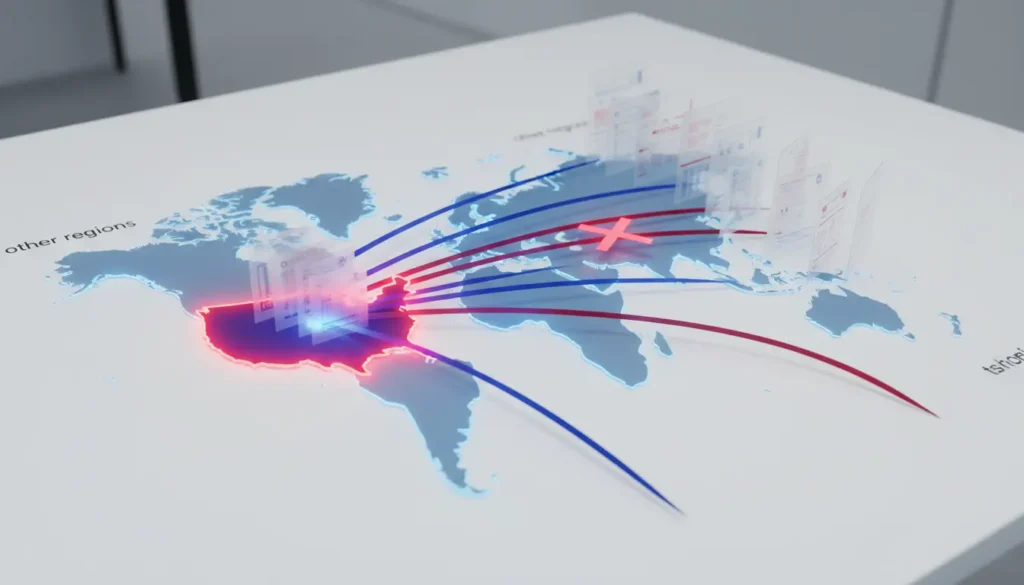
US antitrust risks in cross border transactions center on three practical issues: whether you must file under the Hart-Scott-Rodino (HSR) Act, how long review can take once agencies request more information, and how to avoid illegal pre-closing coordination (often called gun jumping). In 2026, the baseline expectation is parallel, data-heavy reviews and tighter scrutiny of […]
Executive US Visas 2026: L-1A, E-1/E-2, O-1, EB-1C

An overview of US employment visas for executives in 2026 mainly comes down to matching the executive’s real job duties and corporate structure to the correct visa category, most often L-1A, E-1 or E-2, O-1, and the EB-1C green card path. Recent practice continues to reward clear org charts, delegated authority, and consistent corporate documentation […]
US Compliance Audits for European Operations: Evidence

A compliance audit for US operations of European companies is a structured review of how your US subsidiary, branch, or sales footprint actually works across contracts, trade compliance, privacy and security commitments, employment, and corporate governance, so you can prove control and reduce parent-company exposure. In 2026, the audit standard is evidence, meaning documented workflows […]
US Executive Visa Pathways 2026: L-1A, E-1/E-2, EB-1C

An overview of US employment visas for executives is mainly a comparison of three pathways: temporary transfers (especially L-1A), treaty-based roles (E-1 or E-2), and permanent residence options that can fit senior leaders (most often EB-1C, sometimes EB-2 NIW). In 2026, the practical differences come down to speed, eligibility evidence, travel flexibility, and how closely […]
Why Boutique Law Firms Excel at Cross-Border Work in 2026

The advantages of boutique law firms for cross border work usually come from speed, senior attention, and tighter coordination across jurisdictions. In 2026, these advantages matter more because cross-border projects face more “proof” requirements from banks and counterparties, plus higher friction around sanctions, export controls, data handling, and dispute enforceability. When you run a cross-border […]
Industrial pricing and contract advisory for US deals: guide

B2B industrial pricing and contract advisory for US deals helps you set defensible price levels and write contract terms that protect margin, limit liability, and reduce payment and compliance friction in US transactions. In 2026, the fastest wins come from aligning pricing logic with US buyer expectations and making your contract stack “audit-ready” for procurement […]
Transatlantic dispute resolution for corporates: overview

Transatlantic dispute resolution legal services for corporates are cross-border legal services that help you prevent, manage, and resolve business disputes that span the US and Europe, with an emphasis on enforceability, confidentiality, and speed. In 2026, the best providers combine litigation and arbitration strategy with contract architecture, evidence control, and a clear enforcement plan tied […]
US Product Liability Risk Audit for Industrial Exporters

A US product liability risk audit for industrial exporters is a structured review of your products, warnings, contracts, insurance, and claims readiness to reduce exposure when you sell into the United States. In 2026, you run it to prevent two expensive outcomes, a plaintiff-friendly injury claim and a “paper trail” failure where your documentation cannot […]
European vs US Compliance: A Cross-Border Operating System

European vs US approaches to compliance management differ mainly in how rules get made and enforced: Europe relies more on principles-based regulation with coordinated supervisory models, while the US leans on agency-driven enforcement, litigation risk, and sector specific rules. In 2026, you manage both best when you translate each region’s expectations into the same operating […]